The AI boom has a location problem. 83% of Australians don't want it next door.
New Airteam research finds 83% of Australians would not live near an AI data centre, while willing buyers expect an average $35,163 property discount.
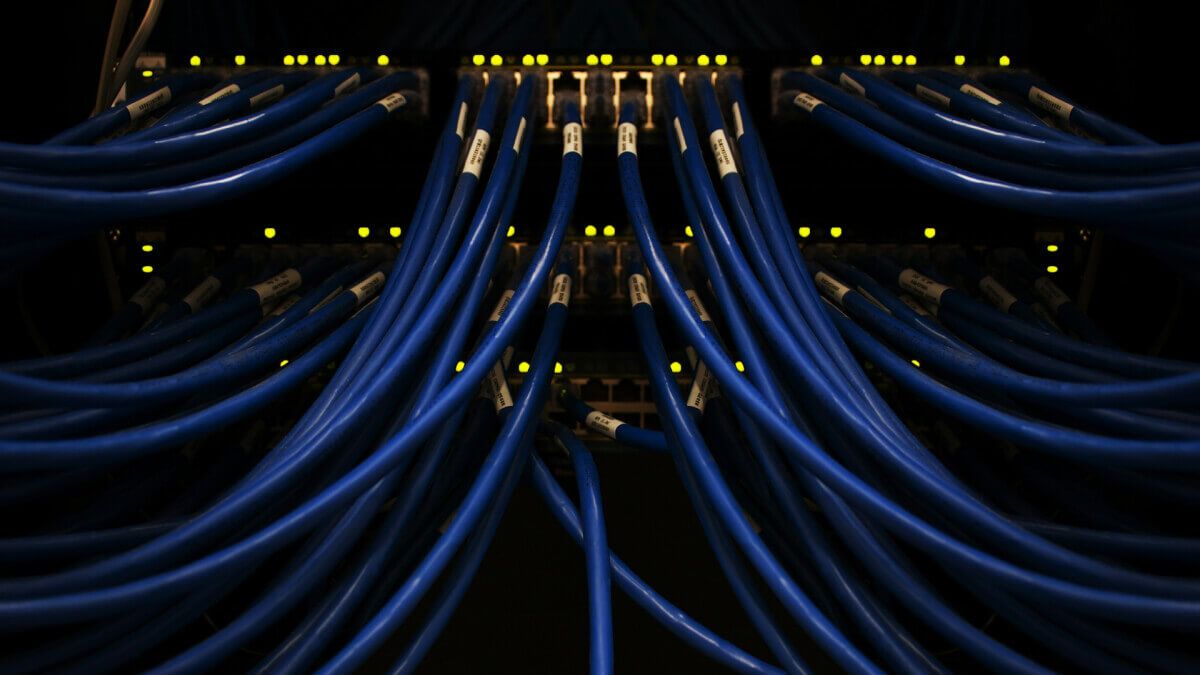
For most of the AI investment story, the infrastructure behind it stayed out of frame. Server farms in regional paddocks. Cooling towers nobody photographed.
That distance is closing.
New research from Airteam, conducted by Primara Research across a nationally representative sample of 1,000 Australians, finds that 83% would not want to live near an AI data centre. When the question moves from living nearby to buying nearby, the number holds: 83% of prospective buyers would walk away from a purchase near one, and those still willing to consider it want an average of $35,163 off the price to do so.
The public isn't undecided on this. It has already made up its mind.
Sixteen percent see an upside. Eighty-four percent don't.
Support for data centres tends to be argued in the abstract, jobs, investment, digital capability. Put to households directly, the abstraction collapses.
Where the benefit is believed to land:
- Just 16% think their local community would see any meaningful benefit from a nearby data centre.
- 84% do not.
That imbalance is doing most of the explanatory work here. Nobody needs to be persuaded that resistance is high when almost nobody can point to what they'd personally gain from it.
“Eighty-four percent of Australians don't believe their local community will see a meaningful benefit from AI data centres,” says Rich Atkinson, Executive Director of Airteam. “It's a reasonable expectation that growth should work for the people it's built among, not just for shareholders overseas.”
Three separate reasons to say no
Underneath the headline number sit three distinct objections, and they don't overlap much.
Jobs:
- 86% are concerned about AI-driven job losses.
Environment:
- 80% are worried about noise and air pollution.
- 78% are worried about the strain on scarce water resources.
Trust:
- 52% don't trust big tech companies to be transparent about their water and power use.
- A single objection might be dismissed as squeamishness. Three independent ones, each with majority or near-majority backing, look more like due diligence.
A price tag on the objection
Belief and behaviour line up. Among buyers who ruled out a purchase near a data centre outright, 76.8% said nothing under $30,000 would move them.
What that resistance costs, in practice:
- National average discount demanded: $35,163
- Western Australia: highest in the country, at $36,802, with 83.7% requiring at least $30,000 off
- NSW: lowest average nationally, at $34,325
“This research puts a dollar figure on something the industry rarely quantifies: the cost that infrastructure investment places on ordinary households and the neighbourhoods they live in,” says Atkinson. “Those considerations matter, and they need to be part of the conversation.”
Age matters more than address
Split the numbers by state and the map is almost flat. Split them by generation and it isn't.
Willingness to live nearby, oldest to youngest:
- Boomers: 92.6% unwilling
- Gen X: 84.2% unwilling
- Gen Z: 81.5% unwilling
- Millennials: 75.0% unwilling, the most open cohort
- Willingness to buy nearby, and at what price:
- Boomers: highest discount required, at $36,355
- Gen Z: lowest average discount, at $30,877, likely reflecting affordability pressure outweighing proximity concerns
- Millennials: 25% would buy at full price, more than triple the Boomer rate, though 74.5% of those who wouldn't still want $30,000 or more knocked off
State-level sentiment ranges just six points, from 79.5% in South Australia to 85.4% in Victoria. The generational range is closer to eighteen. Whatever appetite exists for this infrastructure is a function of age, not postcode.
Infrastructure or liability, depending on how it's built
“The overwhelming majority of those unwilling to buy near a data centre require a discount of $30,000 or more,” says Peter Drennan, Head of Research and Data at Primara Research. “You aren't dealing with a minority preference. You're dealing with a fundamentally compressed buyer pool, and that is what moves property prices.”
Atkinson frames the stakes beyond the transaction: “Australia has a genuine opportunity to become a serious tech powerhouse, and data centre investment is part of what makes that possible. But the industry won't thrive on infrastructure alone. Community acceptance is what sustains it. If data centres are built in a way that captures benefits locally, creates real jobs and earns genuine trust, they become an accelerant for Australian tech. Built without that, they're just foreign-owned infrastructure that locals resent.”
The technology isn't the variable. The relationship with the communities hosting it is.
About the data
The data used in this release is from a survey commissioned by Primara Research for Airteam in June 2026.
Survey results
Question - Which of the following benefits, if any, do you think AI data centres will bring to Australia? Select all that apply.
Results by generation
| Comparison criteria | Gen Z | Millennial | Gen X | Boomers | Total |
|---|---|---|---|---|---|
| Meaningful long-term jobs for Australians | 14.3% | 22.5% | 18.6% | 15.8% | 18.7% |
| Stronger economic growth that benefits ordinary people | 29.4% | 34.8% | 25.7% | 16.9% | 27.0% |
| Investment in local communities and infrastructure | 26.9% | 33.1% | 28.5% | 28.3% | 29.9% |
| Australia becoming a leader in AI and technology | 31.9% | 36.8% | 25.7% | 26.5% | 30.6% |
| Lower-cost AI services for businesses and consumers | 27.7% | 26.4% | 24.5% | 19.5% | 24.2% |
| None of the above | 27.7% | 23.9% | 35.6% | 47.1% | 33.6% |
Results by gender
| Comparison criteria | Female | Male | Total |
|---|---|---|---|
| Meaningful long-term jobs for Australians | 15.9% | 23.0% | 18.7% |
| Stronger economic growth that benefits ordinary people | 24.5% | 31.1% | 27.0% |
| Investment in local communities and infrastructure | 26.3% | 35.5% | 29.9% |
| Australia becoming a leader in AI and technology | 26.6% | 36.7% | 30.6% |
| Lower-cost AI services for businesses and consumers | 22.1% | 27.6% | 24.2% |
| None of the above | 38.7% | 25.8% | 33.6% |
Results by state
| Comparison criteria | NSW | QLD | SA | VIC | WA | Other | Total |
|---|---|---|---|---|---|---|---|
| Meaningful long-term jobs for Australians | 20.3% | 18.1% | 20.5% | 18.9% | 16.7% | 5.1% | 18.7% |
| Stronger economic growth that benefits ordinary people | 28.7% | 25.3% | 31.3% | 25.1% | 31.5% | 10.3% | 27.0% |
| Investment in local communities and infrastructure | 32.9% | 29.7% | 28.9% | 30.2% | 28.7% | 10.3% | 29.9% |
| Australia becoming a leader in AI and technology | 33.5% | 25.3% | 25.3% | 30.9% | 35.2% | 28.2% | 30.6% |
| Lower-cost AI services for businesses and consumers | 27.1% | 23.1% | 22.9% | 24.4% | 19.4% | 20.5% | 24.2% |
| None of the above | 28.1% | 40.7% | 32.5% | 32.7% | 37.0% | 46.2% | 33.6% |
Question - Would you buy a home with a large AI data centre nearby?
Results by generation
| Comparison criteria | Gen Z | Millennial | Gen X | Boomers | Total |
|---|---|---|---|---|---|
| No | 81.5% | 75.0% | 84.2% | 92.6% | 82.9% |
| Yes | 18.5% | 25.0% | 15.8% | 7.4% | 17.1% |
Results by gender
| Comparison criteria | Female | Male | Total |
|---|---|---|---|
| No | 86.4% | 77.5% | 82.9% |
| Yes | 13.6% | 22.5% | 17.1% |
Results by state
| Comparison criteria | New South Wales | Queensland | South Australia | Victoria | Western Australia | Other states | Total |
|---|---|---|---|---|---|---|---|
| No | 81.3% | 84.1% | 79.5% | 85.4% | 79.6% | 89.7% | 82.9% |
| Yes | 18.7% | 15.9% | 20.5% | 14.6% | 20.4% | 10.3% | 17.1% |
Question - You said you wouldn’t buy a home with a data centre nearby. What discount on the purchase price would you need before you’d consider it?
Results by generation
| Comparison criteria | Gen Z | Millennial | Gen X | Boomers | Total |
|---|---|---|---|---|---|
| Up to $5,000 | 3.1% | 3.7% | 5.2% | 1.6% | 3.4% |
| $5,000 to $10,000 | 10.3% | 6.4% | 4.2% | 2.0% | 4.9% |
| $10,000 to $20,000 | 16.5% | 6.0% | 2.8% | 7.5% | 6.9% |
| $20,000 to $30,000 | 16.5% | 9.4% | 4.7% | 6.0% | 8.0% |
| More than $30,000 | 53.6% | 74.5% | 83.1% | 82.9% | 76.8% |
Results by gender
| Comparison criteria | Female | Male | Total |
|---|---|---|---|
| Up to $5,000 | 4.6% | 1.3% | 3.4% |
| $5,000 to $10,000 | 4.2% | 6.2% | 4.9% |
| $10,000 to $20,000 | 6.1% | 8.2% | 6.9% |
| $20,000 to $30,000 | 8.8% | 6.6% | 8.0% |
| More than $30,000 | 76.3% | 77.6% | 76.8% |
Results by state
| Comparison criteria | New South Wales | Queensland | South Australia | Victoria | Western Australia | Other states | Total |
|---|---|---|---|---|---|---|---|
| Up to $5,000 | 3.2% | 2.0% | 4.5% | 4.3% | 1.2% | 8.6% | 3.4% |
| $5,000 to $10,000 | 7.1% | 4.6% | 1.5% | 4.3% | 3.5% | 5.7% | 4.9% |
| $10,000 to $20,000 | 8.3% | 5.9% | 7.6% | 6.4% | 5.8% | 5.7% | 6.9% |
| $20,000 to $30,000 | 7.5% | 6.5% | 9.1% | 9.8% | 5.8% | 8.6% | 8.0% |
| More than $30,000 | 73.8% | 81.0% | 77.3% | 75.3% | 83.7% | 71.4% | 76.8% |
Update
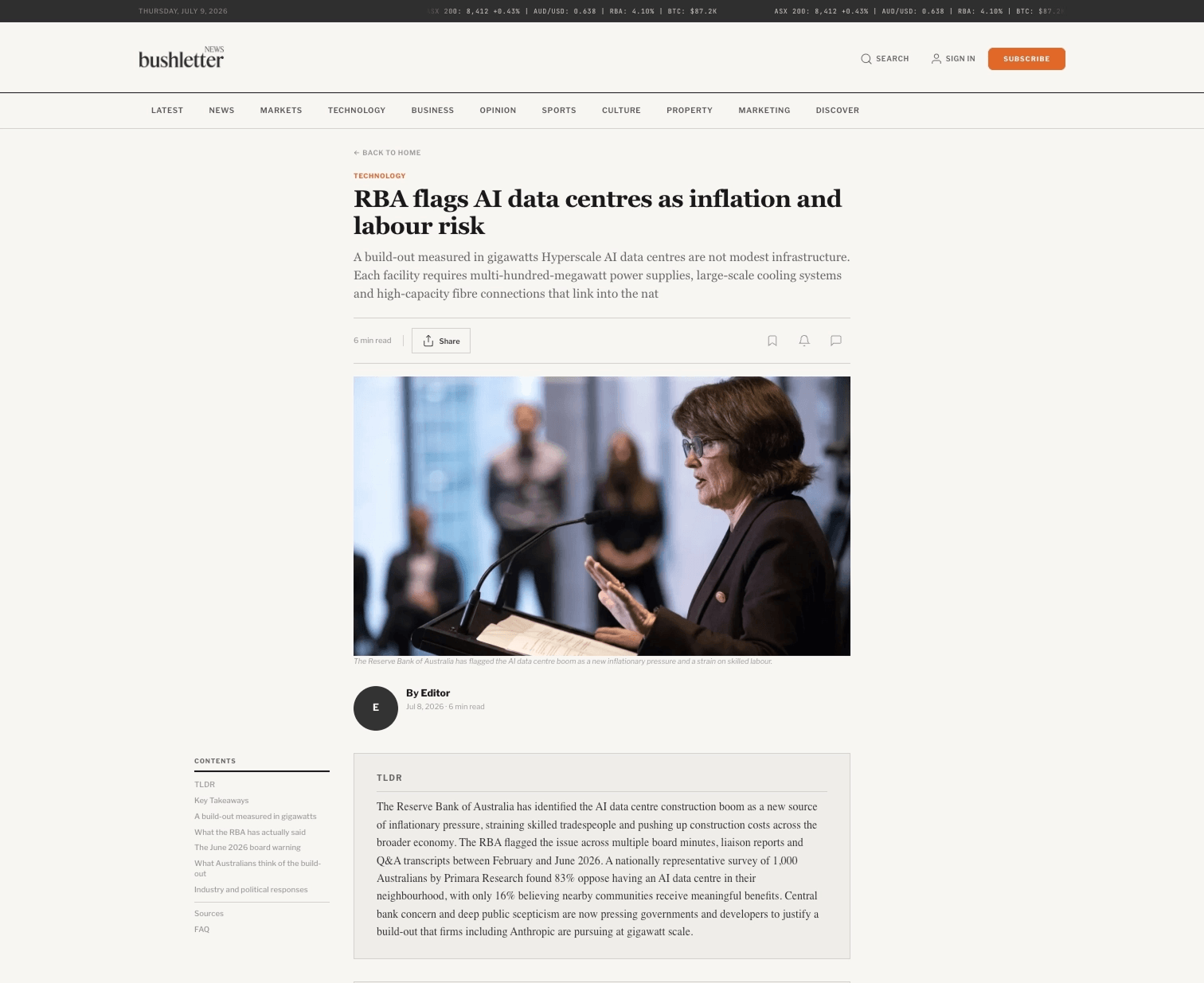
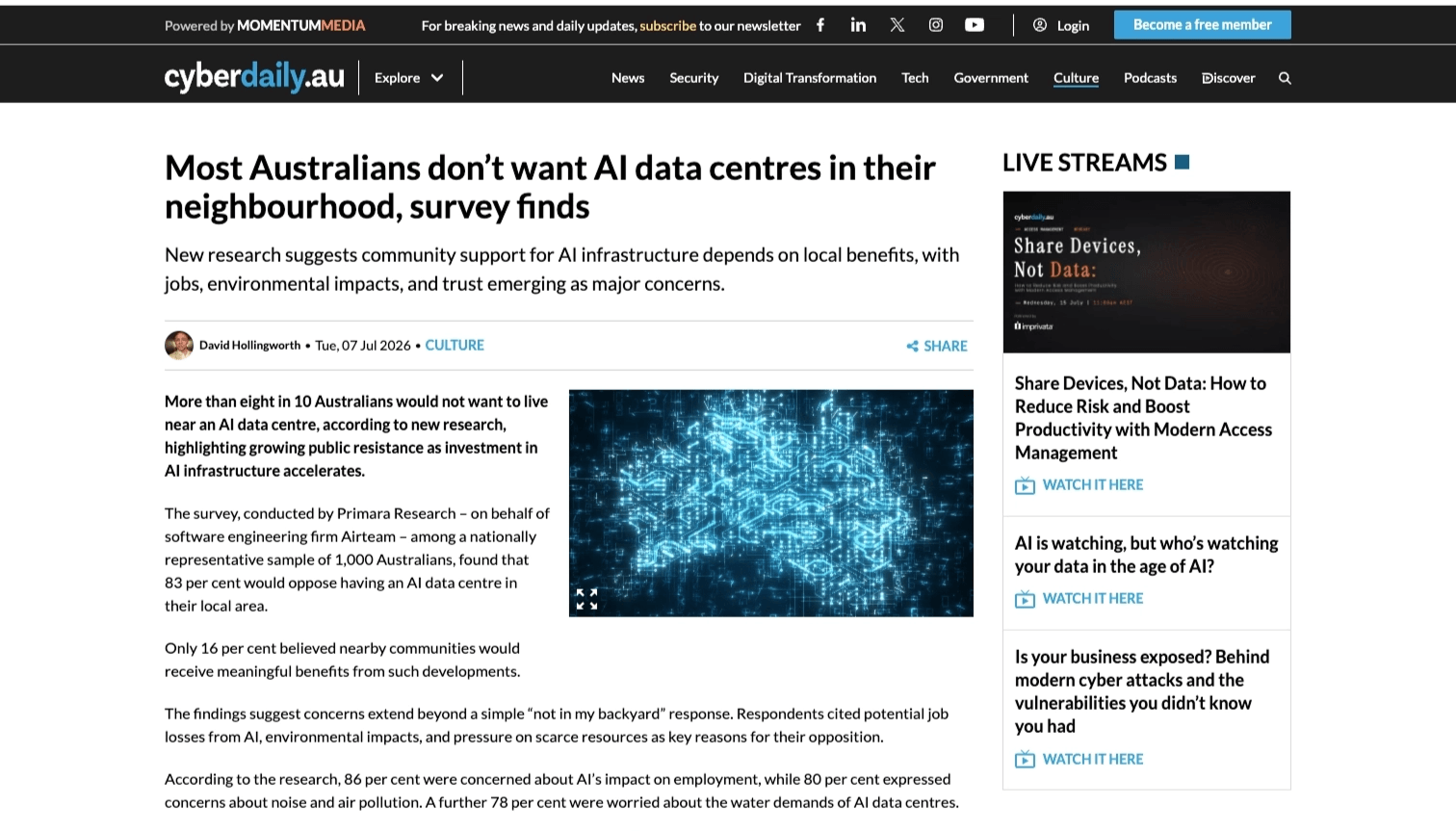
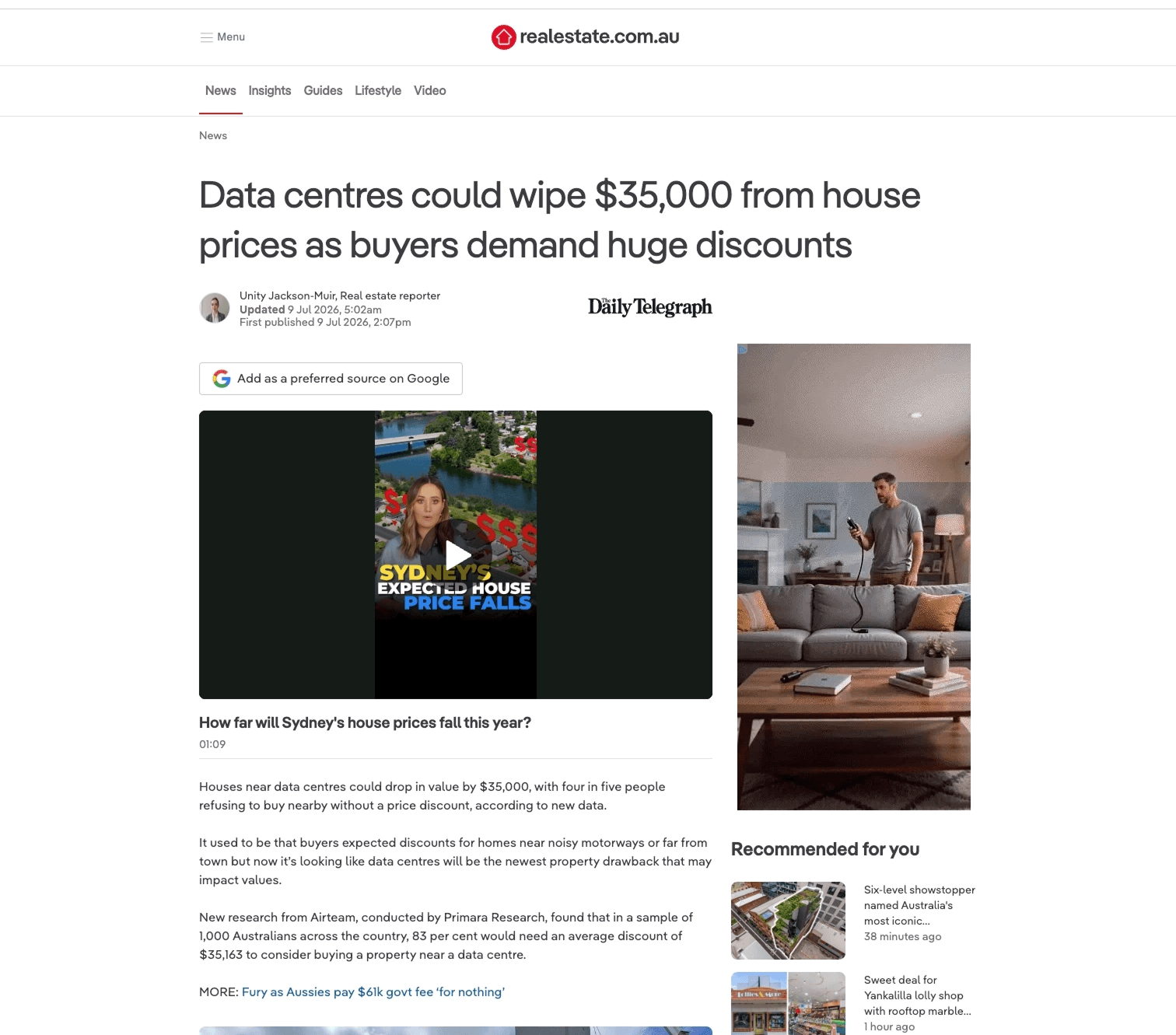
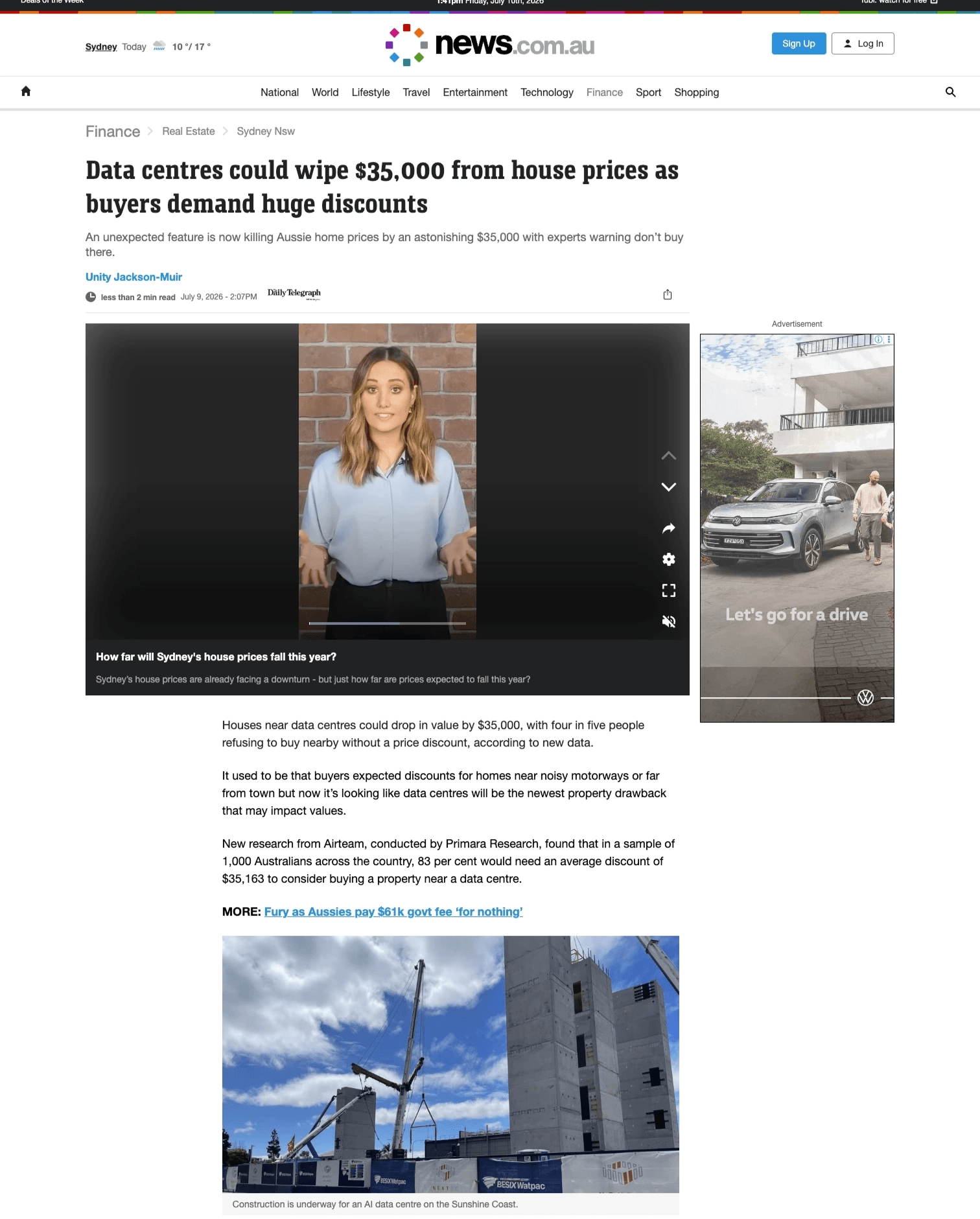
Bushletter.com and CyberDaily.au picked up on our data, utilising the 83% of Australians don’t want to live near a data centre to strengthen their pieces. The BushLetter article is here and the Cyber Daily article is here As for the discount needed data, our analysis was picked up and ran on both RealEstate.com.au and News.com.au. Real Estate article is here and News.com.au article is here.