Case study
Westpac Banking Corporation
From urgent UX brief to launch in three months
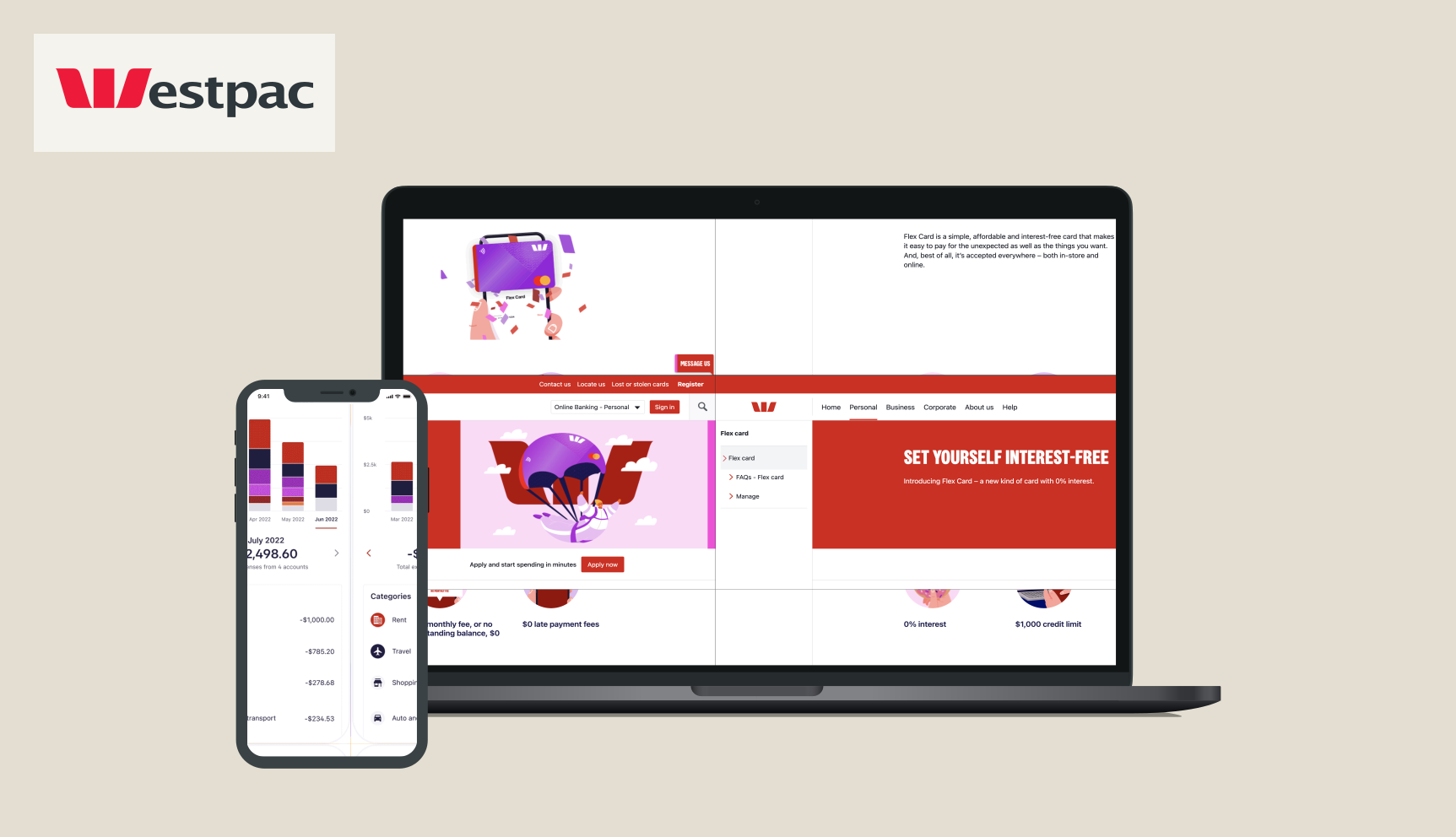
Westpac’s UX team had one week to develop its response to the rapid growth of buy now, pay later. Its internal designers were already spread across multiple projects, and the new product needed to work within the technical and regulatory requirements of a major Australian bank.
Within days, Airteam’s Head of UX was embedded in the Westpac team. Concepts went to leadership a week later. Three months after the original brief, Westpac launched the Flex Card.
Quick facts
Westpac used Airteam’s team augmentation services model to add senior UX capacity when an urgent product opportunity emerged.
Airteam’s Head of UX joined the team within days, working alongside Westpac’s designers, developers and stakeholders from initial concept through user testing, detailed journey mapping and delivery.
- Client: Westpac Banking Corporation
- Industry: Banking and financial services
- Services: Team augmentation, UX and concept design, user testing, journey and business logic mapping
One week to respond
Buy now, pay later was changing how younger Australians thought about credit.
Westpac’s own research found that 53% of Gen Z and 48% of Millennials felt traditional credit cards were losing relevance. Competitors including NAB and CommBank had already introduced no-interest credit products.
Westpac’s UX team was asked to develop a response and present its thinking to leadership within one week.
The brief brought together five priorities:
- Introduce a competitive product offering
- Appeal to a younger audience
- Work within Westpac’s existing financial products and systems
- Improve the digital experience
- Meet the regulatory requirements of a major bank
The challenge wasn’t a lack of capability inside Westpac, it was capacity - its designers were already working across multiple projects, while the deadline wasn’t moving.
Embedded within days
Westpac and Airteam already had an established working relationship, which meant the team could move quickly.
Within days, Airteam’s Head of UX, Nick Simpson, joined Westpac’s internal UX team.
There was no separate Airteam project team or lengthy handover. Nick worked inside Westpac’s existing processes, alongside its designers, stakeholders and developers, adding expert UX capacity where it was needed.
Within the first week, the combined team assessed the market, generated product concepts and presented them to Westpac’s leadership. A direction was selected and the work moved immediately into testing and refinement.
That’s the role team augmentation can play when deadlines and internal capacity don’t line up: add the right specialist to the existing team, quickly enough to keep the work moving.
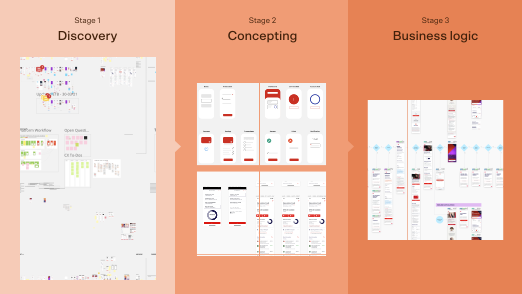
From concept to something customers could use
Once a direction had been chosen, the team tested it through several rounds of research with real users.
Feedback helped refine the proposition, interactions and customer journeys while the product was still being shaped.
At the same time, Nick worked closely with Westpac’s developers to make sure the experience could be delivered within the bank’s existing technical infrastructure.
In a regulated environment, that meant designing the customer experience and the underlying business rules together.
The edge cases were part of the product
Much of the design work went into scenarios customers ideally wouldn’t encounter.
What happens after a missed repayment? What does the customer see? What can they do next? How does the product respond while still meeting the bank’s obligations?
Flex Card provides a good example. If a customer misses a minimum repayment, they aren’t charged a late fee, but the card is suspended until the repayment is made.
That rule needs more than business logic behind the scenes. The customer needs to understand what’s happened, why their card has been suspended and what they need to do to use it again.
Mapping those scenarios in detail helped the team account for regulatory requirements without leaving customers to work out the consequences themselves.
For regulated digital products, the unusual journeys deserve as much attention as the happy path. That’s often where customer confusion and compliance risk appear.
From brief to launch in three months
Westpac announced the Flex Card in October 2021.
The digital card launched with a $1,000 credit limit, no interest on purchases, no late payment fees and no foreign currency fees. Customers could apply digitally, with approved customers able to access their card through the Westpac app and mobile wallet.
From the initial UX brief to launch took three months.
Flex Card has since been withdrawn from sale, but the project remains a useful example of what team augmentation can unlock when an internal team needs specialist capacity quickly.
Airteam joined an existing Westpac team within days, worked inside its established environment and stayed with the project from initial concept through to delivery, giving Westpac’s team more capacity when the deadline demanded it.
Days
To embed senior UX capacity into Westpac’s team
1 week
From brief to leadership presentation
3 months
From initial concept to product launch