Connectivity has become property infrastructure. And Australians are drawing hard lines.
Explore new research on how mobile coverage, 5G visibility, and internet speed influence Australian property decisions, buyer behaviour, and value.
Australia’s relationship with digital connectivity has shifted decisively from “nice to have” to non-negotiable infrastructure. To understand how far that shift has gone, we surveyed 1,012 Australians on how mobile coverage (and its literal visibility) and internet speeds influence their real-world decisions.
The results show a population drawing clearer boundaries than policymakers, platforms and property markets may realise.
Across housing, mobile coverage and fixed internet, the pattern is consistent:
- Properties lose buyers when connectivity is poor.
- Properties lose buyers when infrastructure is visually intrusive.
- Younger Australians are willing to pay real money for better digital access.
Connectivity now influences property values and purchasing decisions in ways that look increasingly similar to electricity, water and transport. Unlike those utilities, perception, visibility and trust play an outsized role.
What follows breaks this shift down, piece by piece.
1. The 5G visibility penalty. When infrastructure becomes a liability
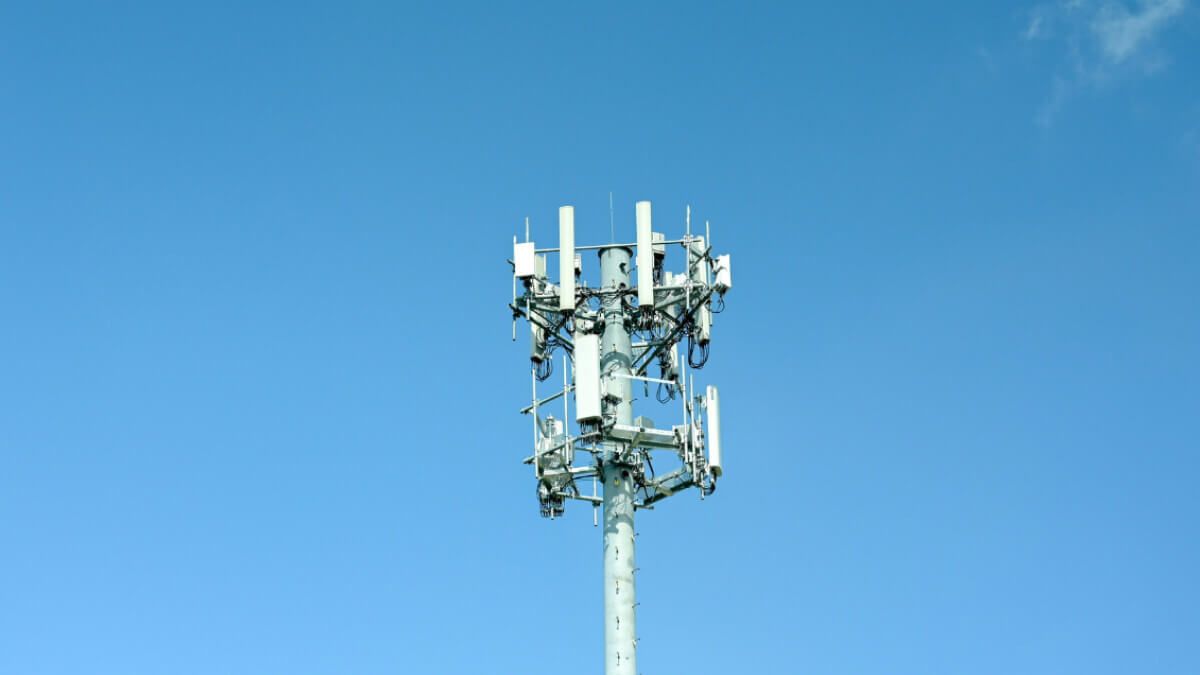
When we asked 1,012 Australians how a visible 5G tower would affect their willingness to buy a property, the answer was not subtle.
55% of potential buyers would not pay full market value for a home near visible 5G infrastructure. Nearly one in four, 23%, said they would refuse to buy at any price.
Another 23% would only proceed with at least a 5% discount, while 9% would accept smaller concessions. Only one-third said a nearby tower would have no impact on their decision.
Just 12% viewed it as a positive.
This creates a measurable “tower tax” on affected properties. On Sydney’s median house price, the most common discount expectation translates to roughly $87,500 off perceived value.
The aversion is uneven:
- NSW buyers are the most resistant nationally.
- Millennials show the strongest overall discomfort, while older generations are more absolute.
- Over a quarter of Boomers and Gen X would walk away entirely.
- Gen Z is more pragmatic. Fewer refuse outright, but many treat the tower as leverage rather than a deal-breaker.
As 5G infrastructure expands, that tension is set to intensify. Telstra alone now operates more than 6,400 5G towers, up 26% year on year, with 2025 marking the fastest rollout in three years. Optus and Vodafone add further density.
The technology delivers real benefits. The visual presence still carries a cost.
2. No signal, no sale. The blackspot penalty is worse than the tower
If visible towers reduce demand, poor mobile coverage eliminates it.
When the same group of 1,012 Australians were asked about properties in mobile blackspots, 61% said they would refuse to buy outright. That rejection rate exceeds resistance to visible 5G towers.
Only 8% would purchase without hesitation. A further 14% would consider buying, but only with a discount, creating a clear “blackspot penalty” in the market.
Demographic splits sharpen the impact:
- Women are significantly more likely than men to rule out blackspot properties.
- Baby Boomers show the highest resistance overall, using purchasing power to avoid compromise.
- Younger buyers are more flexible, but still unwilling to accept persistent connectivity gaps.
This plays out against a backdrop of growing mistrust in coverage data. Carrier maps frequently fail to match lived experience, with terrain, buildings and interference creating dead zones that never appear on official maps. Government tools like the Mobile Audit Visualisation platform exist precisely because reported coverage and reality often diverge.
That trust gap feeds directly into expectations. 69% of Australians believe real estate agents should be legally required to disclose mobile blackspots, treating connectivity as essential infrastructure rather than a lifestyle feature.
In practical terms, poor signal now shrinks buyer pools, delays sales and pressures prices. Even in a supply-constrained housing market, connectivity remains a hard line.
3. Fibre as a premium asset. Younger buyers are paying for speed
Where mobile coverage defines minimum standards, fixed internet increasingly defines competitive advantage.
Among the 1,012 Australians surveyed, 39% said they would pay a premium for fibre-to-the-premises internet, averaging around $2,000. But the generational divide is stark.
Six in ten Gen Z buyers are willing to pay extra, compared with just 21% of Baby Boomers. Millennials sit in between, but put the most money behind the preference. A meaningful share would pay more than $5,000 for a fibre-connected home.
Geography matters less than expected:
- Willingness to pay is highest in NSW and Victoria and stronger in major cities, but regional buyers are not far behind.
- Where fibre is available, demand follows.
- Where it is not, expectations adjust downward, reinforcing underinvestment.
Fast internet has crossed from amenity to asset. For under-40 buyers, fibre connectivity signals work flexibility, income potential and long-term relevance. Homes without it are increasingly competing at a structural disadvantage.
The bigger shift
When it comes to the home, Australians are drawing firmer boundaries.
They want reliable connectivity, but not at the expense of amenity or transparency.
They will pay premiums for infrastructure that expands opportunity.
And they will walk away entirely when it isn’t there.
Our survey made one thing very clear: connectivity is no longer neutral background infrastructure. It shapes value, behaviour and loyalty in measurable ways.
Ignoring that reality does not make the friction disappear. It simply moves the cost somewhere else.
About the data
The data used in this analysis came from a survey of 1,012 Australian adults commissioned by Airteam in October 2025 together with other data sources below listed.
5G Tower Installations
5G capable
| Comparison criteria | Telstra | Optus | TPG |
|---|---|---|---|
| 2018 | 0 | 0 | 0 |
| 2019 | 0 | 0 | 0 |
| 2020 | 797 | 426 | 0 |
| 2021 | 2,695 | 1,010 | 163 |
| 2022 | 4,071 | 1,932 | 1,029 |
| 2023 | 4,559 | 2,905 | 2,063 |
| 2024 | 5,082 | 4,038 | 3,050 |
| 2025 | 6,421 | 4,939 | 3,759 |
Total towers
| Comparison criteria | Telstra | Optus | TPG |
|---|---|---|---|
| 2018 | 9,429 | 7,335 | 5,422 |
| 2019 | 9,972 | 7,712 | 5,608 |
| 2020 | 10,451 | 7,980 | 5,675 |
| 2021 | 10,766 | 8,238 | 5,892 |
| 2022 | 11,002 | 8,632 | 5,728 |
| 2023 | 11,302 | 8,821 | 5,769 |
| 2024 | 11,707 | 9,201 | 5,712 |
| 2025 | 11,767 | 9,391 | 5,207 |
Australia's Most Unreliable Mobile Coverage by State
Analysis of government Mobile Audit Visualisation data reveals the LGAs in each state with the most inconsistent coverage reports, where carrier maps diverge most significantly from actual signal performance:
- Queensland: Murweh (population 3,992, 654km west of Brisbane)
- Northern Territory: Roper Gulf (7,516 residents, 15km east of Darwin)
- Western Australia: Broome (18,870 residents, 1,683km northeast of Perth)
- Victoria: Glenelg (20,007 residents, 315km west of Melbourne)
- New South Wales: Cobar (4,015 residents, 567km northwest of Sydney)
- Tasmania: Waratah-Wynyard (14,905 residents, 234km northwest of Hobart)
- South Australia: Tatiara (7,071 residents, 224km northwest of Adelaide)
Survey Results
Question: How would the visible presence of a 5G mobile phone tower near a property influence your decision to purchase it?
Results by generation
| Comparison criteria | Gen Z | Millennials | Gen X | Baby Boomers | Total |
|---|---|---|---|---|---|
| It would be a deal-breaker; I would not buy it, regardless of price | 9% | 21% | 27% | 27% | 23% |
| I would only consider it with a large discount (more than 5% off the asking price) | 33% | 26% | 21% | 17% | 23% |
| I would only consider it with a small discount (less than 5% off the asking price) | 15% | 15% | 7% | 4% | 9% |
| It would have no influence on my decision | 32% | 26% | 33% | 40% | 33% |
| It would be a positive feature, as it likely means excellent mobile signal | 11% | 12% | 11% | 13% | 12% |
Results by gender
| Comparison criteria | Male | Female | Total |
|---|---|---|---|
| It would be a deal-breaker; I would not buy it, regardless of price | 22% | 24% | 23% |
| I would only consider it with a large discount (more than 5% off the asking price) | 23% | 22% | 23% |
| I would only consider it with a small discount (less than 5% off the asking price) | 8% | 9% | 9% |
| It would have no influence on my decision | 35% | 33% | 33% |
| It would be a positive feature, as it likely means excellent mobile signal | 12% | 12% | 12% |
Results by state
| Comparison criteria | NSW | VIC | QLD | WA | All Other States | Total |
|---|---|---|---|---|---|---|
| It would be a deal-breaker; I would not buy it, regardless of price | 26% | 23% | 22% | 22% | 20% | 23% |
| I would only consider it with a large discount (more than 5% off the asking price) | 22% | 23% | 21% | 29% | 20% | 23% |
| I would only consider it with a small discount (less than 5% off the asking price) | 11% | 9% | 9% | 6% | 7% | 9% |
| It would have no influence on my decision | 27% | 36% | 38% | 33% | 38% | 33% |
| It would be a positive feature, as it likely means excellent mobile signal | 14% | 10% | 11% | 11% | 15% | 12% |
Results by city / regional
| Comparison criteria | Regional | Metro | Total |
|---|---|---|---|
| It would be a deal-breaker; I would not buy it, regardless of price | 21% | 24% | 23% |
| I would only consider it with a large discount (more than 5% off the asking price) | 15% | 25% | 23% |
| I would only consider it with a small discount (less than 5% off the asking price) | 8% | 9% | 9% |
| It would have no influence on my decision | 43% | 30% | 33% |
| It would be a positive feature, as it likely means excellent mobile signal | 13% | 12% | 12% |
Question: How much more would you pay for an identical house if it had the best possible internet (FTTP) versus the slowest?
Results by generation
| Comparison criteria | Gen Z | Millennials | Gen X | Baby Boomers | Total |
|---|---|---|---|---|---|
| I would not pay anything extra | 40% | 48% | 61% | 79% | 61% |
| $1 – $2,499 | 34% | 28% | 18% | 12% | 20% |
| $2,500 – $4,999 | 18% | 9% | 13% | 5% | 10% |
| $5,000 – $9,999 | 4% | 9% | 5% | 3% | 5% |
| $10,000 or more | 4% | 5% | 4% | 2% | 4% |
Results by gender
| Comparison criteria | Male | Female | Total |
|---|---|---|---|
| I would not pay anything extra | 61% | 61% | 61% |
| $1 – $2,499 | 20% | 21% | 20% |
| $2,500 – $4,999 | 9% | 11% | 10% |
| $5,000 – $9,999 | 6% | 5% | 5% |
| $10,000 or more | 4% | 3% | 4% |
Results by state
| Comparison criteria | NSW | WA | QLD | VIC | All Other States | Total |
|---|---|---|---|---|---|---|
| I would not pay anything extra | 57% | 60% | 68% | 57% | 68% | 61% |
| $1 – $2,499 | 19% | 23% | 18% | 23% | 20% | 20% |
| $2,500 – $4,999 | 12% | 7% | 7% | 11% | 7% | 10% |
| $5,000 – $9,999 | 8% | 3% | 4% | 4% | 4% | 5% |
| $10,000 or more | 4% | 7% | 2% | 4% | 1% | 4% |
Results by city / regional
| Comparison criteria | Metro | Regional | Total |
|---|---|---|---|
| I would not pay anything extra | 60% | 64% | 61% |
| $1 – $2,499 | 21% | 17% | 20% |
| $2,500 – $4,999 | 9% | 11% | 10% |
| $5,000 – $9,999 | 5% | 4% | 5% |
| $10,000 or more | 4% | 3% | 4% |
Question: Would you buy a house with no reliable mobile coverage?
Results by generation
| Comparison criteria | Gen Z | Millennials | Gen X | Baby Boomers | Total |
|---|---|---|---|---|---|
| Yes | 9% | 8% | 10% | 6% | 8% |
| No | 66% | 64% | 60% | 57% | 61% |
| It would depend on the price | 17% | 15% | 16% | 11% | 14% |
| It would depend on the location of the property | 9% | 13% | 14% | 26% | 17% |
Results by gender
| Comparison criteria | Male | Female | Total |
|---|---|---|---|
| Yes | 10% | 6% | 8% |
| No | 56% | 65% | 61% |
| It would depend on the price | 16% | 12% | 14% |
| It would depend on the location of the property | 18% | 17% | 17% |
Results by state
| Comparison criteria | NSW | WA | QLD | VIC | All Other States | Total |
|---|---|---|---|---|---|---|
| Yes | 8% | 10% | 7% | 9% | 5% | 8% |
| No | 61% | 64% | 60% | 61% | 59% | 61% |
| It would depend on the price | 14% | 10% | 16% | 15% | 12% | 14% |
| It would depend on the location of the property | 17% | 16% | 17% | 16% | 24% | 17% |
Results by city / regional
| Comparison criteria | Metro | Regional | Total |
|---|---|---|---|
| Yes | 7% | 9% | 8% |
| No | 63% | 55% | 61% |
| It would depend on the price | 14% | 13% | 14% |
| It would depend on the location of the property | 16% | 23% | 17% |
Question: Would you expect a real estate agent to disclose this information (mobile reception quality)?
Results by generation
| Comparison criteria | Gen Z | Millennials | Gen X | Baby Boomers | Total |
|---|---|---|---|---|---|
| Yes | 64% | 68% | 69% | 71% | 69% |
| No | 19% | 20% | 17% | 16% | 18% |
| Not sure | 17% | 12% | 13% | 13% | 13% |
Results by gender
| Comparison criteria | Male | Female | Total |
|---|---|---|---|
| Yes | 67% | 71% | 69% |
| No | 20% | 16% | 18% |
| Not sure | 14% | 13% | 13% |
Results by state
| Comparison criteria | NSW | WA | QLD | VIC | All Other States | Total |
|---|---|---|---|---|---|---|
| Yes | 68% | 73% | 67% | 68% | 73% | 69% |
| No | 18% | 14% | 19% | 21% | 13% | 18% |
| Not sure | 14% | 13% | 15% | 11% | 14% | 13% |
Results by city / regional
| Comparison criteria | Metro | Regional | Total |
|---|---|---|---|
| Yes | 69% | 68% | 69% |
| No | 19% | 15% | 18% |
| Not sure | 12% | 17% | 13% |
Update
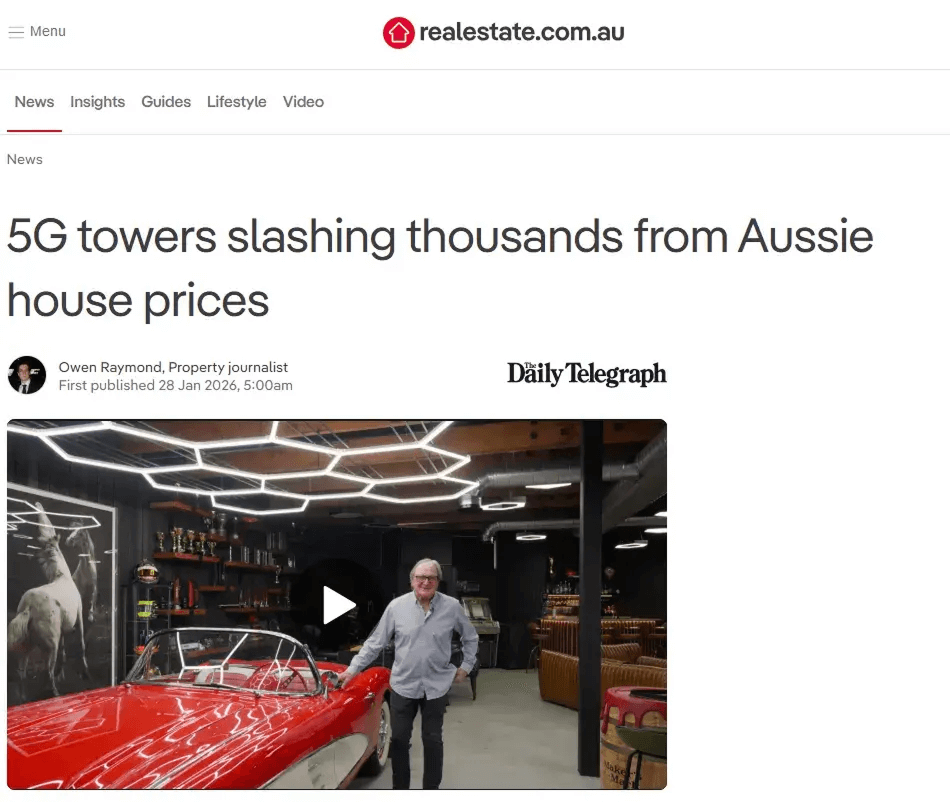
realestate.com.au picked up on our data running a feature on just how impactful the visible view of a 5G tower could be to a property’s value.
Whatever the myths or beliefs when it comes to 5G, the issue is clearly a live one and it’s an important one for property buyers and sellers to know and policymakers and telcos to balance.
The article is here.