Private health premium rise cancellation
Half of privately insured Australians are closer to cancelling than funds might think
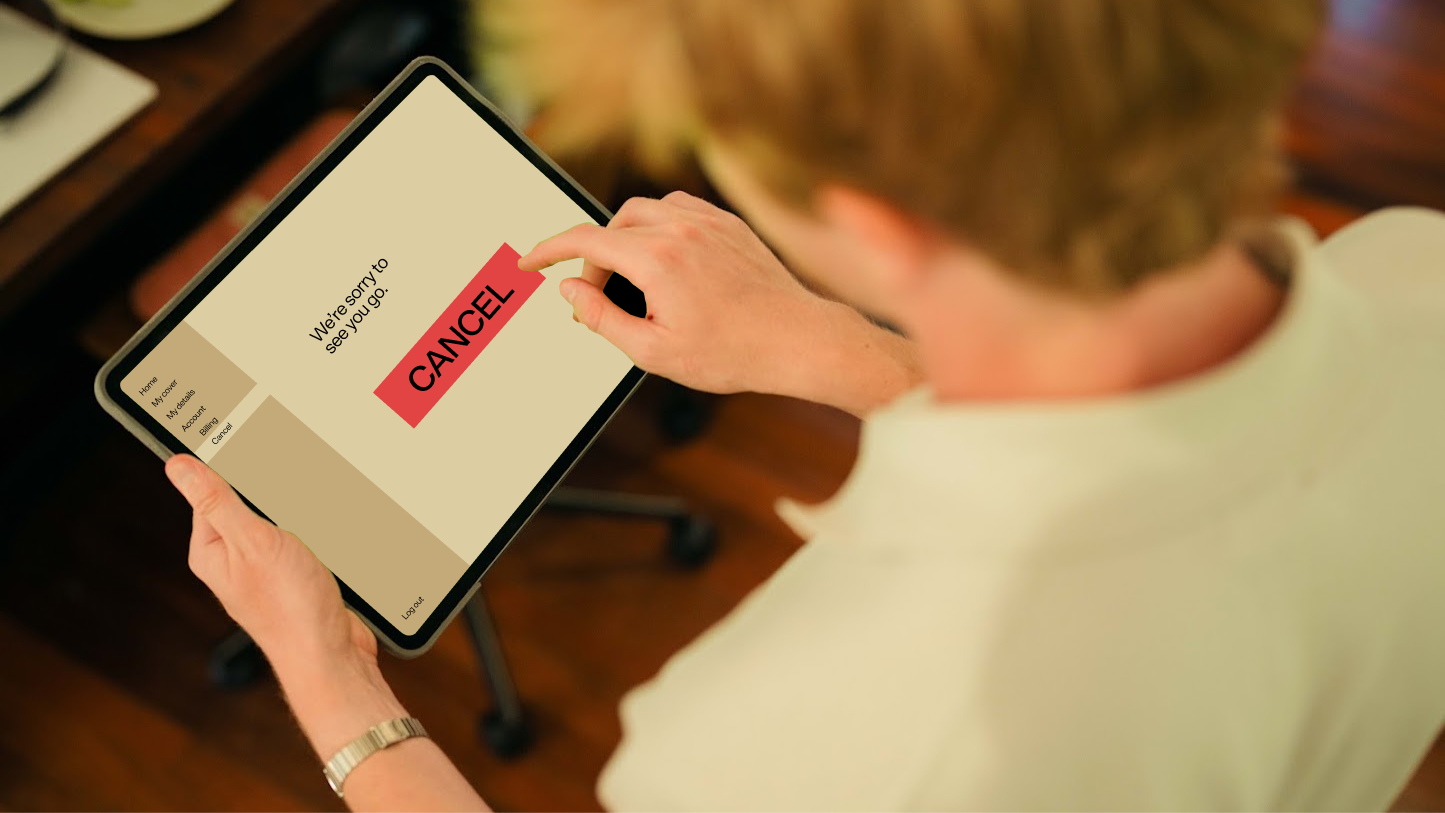
Half of privately insured Australians are closer to cancelling than funds might think.
Private health insurers price annual increases as routine. A few percentage points, approved, applied, absorbed.
Members aren't absorbing them the way that assumption requires.
New research from Airteam, surveying 2,001 Australian adults including 1,215 policyholders, finds that 51.7% of Australians with private health cover would cancel their policy over a $50 monthly premium rise. A quarter would walk away for half that. This isn't a market with room to keep raising prices quietly.
The tolerance for further increases is thinner than the industry appears to be pricing in.
The cancellation line is closer than it looks
Ask policyholders what it would take and the numbers scale down fast, not gradually.
- 51.7% would cancel over a $50 monthly rise.
- Roughly one in three would cancel over a $25 rise.
- 7.4% say they would cancel at any premium rise at all, however small.
That last figure is the one worth sitting with. There's no price increase small enough to avoid losing some members entirely, and this year's round has already reached them.
Replace the businesses that close fast enough, and the topline number keeps climbing even while survival gets worse underneath it. The headline growth figure is concealing the trend, not describing it.
Nearly one in four of these policyholders are within two or three ordinary premium rounds of walking away, and funds that can see this pressure coming are in a far stronger position than the ones that find out once members have already left
Some members are two rounds away from the door
Premiums rise annually in a round approved by the Health Minister. This year's added 4.41%. Run that forward and the runway left for a meaningful share of policyholders is short.
- 23.5% of policyholders who gave a figure for both their premium and their cancellation point have a threshold of
- 10% or less of their own premium.
- Two annual rounds at this year's rate compound to roughly 9.0%.
- Three rounds compound to roughly 13.8%.
At the current pace of increases, that quarter of the policyholder base is two or three ordinary premium rounds away from hitting their limit. This isn't a distant risk on a ten-year horizon. It's arithmetic that resolves within a few years of business-as-usual pricing.
The members funds need most are the ones most ready to leave
A healthy risk pool depends on younger, lower-cost members subsidising the rest. That's precisely the group showing the least tolerance for rising prices.
- Millennials: 61.6% would cancel at a $50 rise, the highest of any generation
- Boomers: 38.3% would cancel at the same threshold, the lowest of any generation
- The gap between them: 23 percentage points
Millennials aren't just the most price-sensitive generation, they're the generation the entire pricing model depends on retaining. A fund that keeps raising premiums without factoring in this gap is optimising for the members it can least afford to lose.
Geography adds another layer of exposure
Price sensitivity isn't evenly spread across the country either.
- Western Australia: 61.5% would cancel at a $50 rise
- National average: 51.7%
That's the widest gap of any major state, meaning a national pricing decision lands as a sharper shock in some markets than others, whether or not it's modelled that way.
This year's rise didn't reach the average member. It reached the exposed ones.
Put the actual numbers against the cancellation thresholds and the picture sharpens further. Surveyed policyholders pay an average $250 a month, or $3,002 a year. This year's approved 4.41% increase, the largest single-year rise since 4.84% in 2017, added an estimated $132 a year on average.
That's well short of the $804 a year, or $67 a month, it would take to trigger cancellation for the average policyholder. On paper, this year's round looks safely absorbed.
But the average conceals the edge cases. The 7.4% with a zero-tolerance threshold, and the quarter sitting within two or three rounds of their limit, don't experience this year's rise as an average. They experience it as one more step toward a number they've already set for themselves.
“For a lot of these households, a premium increase isn't a standalone decision, it's competing with everything else that's got more expensive this year, and it's often the younger members funds can least afford to lose who feel that squeeze first,” says Atkinson.
The next round of increases won't be judged against this year's average member. It will be judged against the members already closest to the edge.
About the data
The data used in this release is from a survey commissioned by Primara Research for Airteam of 2,001 Australian adults online in August 2026, weighted to ABS benchmarks for age, state and gender. Premium and cancellation figures are based on the 1,215 respondents who hold private health insurance and describe stated intention, not observed behaviour. Premium and threshold questions were asked in dollar bands; averages and the 10% threshold measure use band midpoints. The 23.5% figure is based on the 885 policyholders who gave a dollar answer to both their premium and their cancellation threshold. About 40% of this group say they would cancel at any increase at all, meaning their threshold is effectively zero rather than a genuine 10% mark.